


When it comes to Christmas décor, Christmas trees are at the top of the list. If you don’t have anything else that screams Christmas around your home, just having a tree in the corner will make it feel festive.
But what if you don’t have space for a full Christmas tree? Or what if you love Christmas trees so much that you want more than one? In that case, I have the perfect DIY for you. Well, I actually have three DIYs.
With just a few pipe cleaners and some basic supplies, there are so many different ways to make miniature pipe cleaner Christmas trees, perfect for displaying around your home or making with kids during a holiday crafting session. They can be as easy or as complex as you like, depending on which method you choose, and you can even decorate your mini trees when you’re done.
I’ve ordered the trees from easiest to most complex (and the first is so easy it will probably take you about 30 seconds). If you’re crafting with kids, I would stick with the first two (and they don’t require any hot glue). For something a little more three-dimensional and realistic, try the last one.
What You’ll Need

The most important thing you’ll need for any of these crafts is pipe cleaners. For the most realistic tree look, green is the best option, but you aren’t limited to it. If your Christmas décor is more neutral, white pipe cleaners also work; alternatively, you can add a festive touch with silver or gold accents.
I’ve used a selection of colors here as examples, partly because I like the look, and partly because finding large packs of the same kind of green proved harder than I thought it would be. The number of pipe cleaners varies for each DIY project. If you want to try them all, make sure you have plenty ready and a few extras in case of incorrect cuts.
Speaking of cuts, the next item on the list is a pair of scissors. For two of the three crafts, you’ll need to cut the pipe cleaners into smaller pieces. Ensure your scissors are sharp before you begin.
If you’re trying the last DIY, you’ll also need a glue gun. For the first two, the wire of the pipe cleaners keeps the tree structure in place. But for the other, you’ll have to glue the individual pieces together to form the pipe cleaner Christmas tree.
Finally, if you’re making the ruffled Christmas tree (the most complex one), you’ll also need a polystyrene cone. You can also make your own cone shape from cardstock if you want a particular size.
Christmas Tree 1: Spiral

The first pipe cleaner Christmas tree is by far the easiest. In fact, it should only take you a minute or two. The fun part from there is setting up your tree and placing it. Here are the steps to follow:

- Roll a single pipe cleaner into a flat spiral shape. If you want a larger tree, attach two pipe cleaners together on one end and roll them into a larger spiral.
- Pull the centre of the spiral upward to make the tree three-dimensional. Stop at the desired height and adjust the wire in the pipe cleaners to keep it standing upright.
- To add decorations, thread large beads onto the pipe cleaner to resemble ornaments. You can also do this before forming the tree if you have a lot of beads to thread, to avoid interfering with the shape.
- You can also hang paper ornaments from the spiral as decorations if you have a larger tree. Avoid using anything too heavy as the spiral will collapse.
And that’s it! Within a couple of minutes, you’ll have a mini Christmas tree you can pop anywhere around your home.
Christmas Tree 2: Pointy

I don’t really know what else to call this pipe cleaner Christmas tree, so I’ve called it pointy, because the ends of the pipe cleaners stick out in a pointy way like tree branches. It sort of replicates the structure of a larger faux Christmas tree. This doesn’t require any more items beyond the pipe cleaners to create, but it does take a little more time. Here’s how to do it:
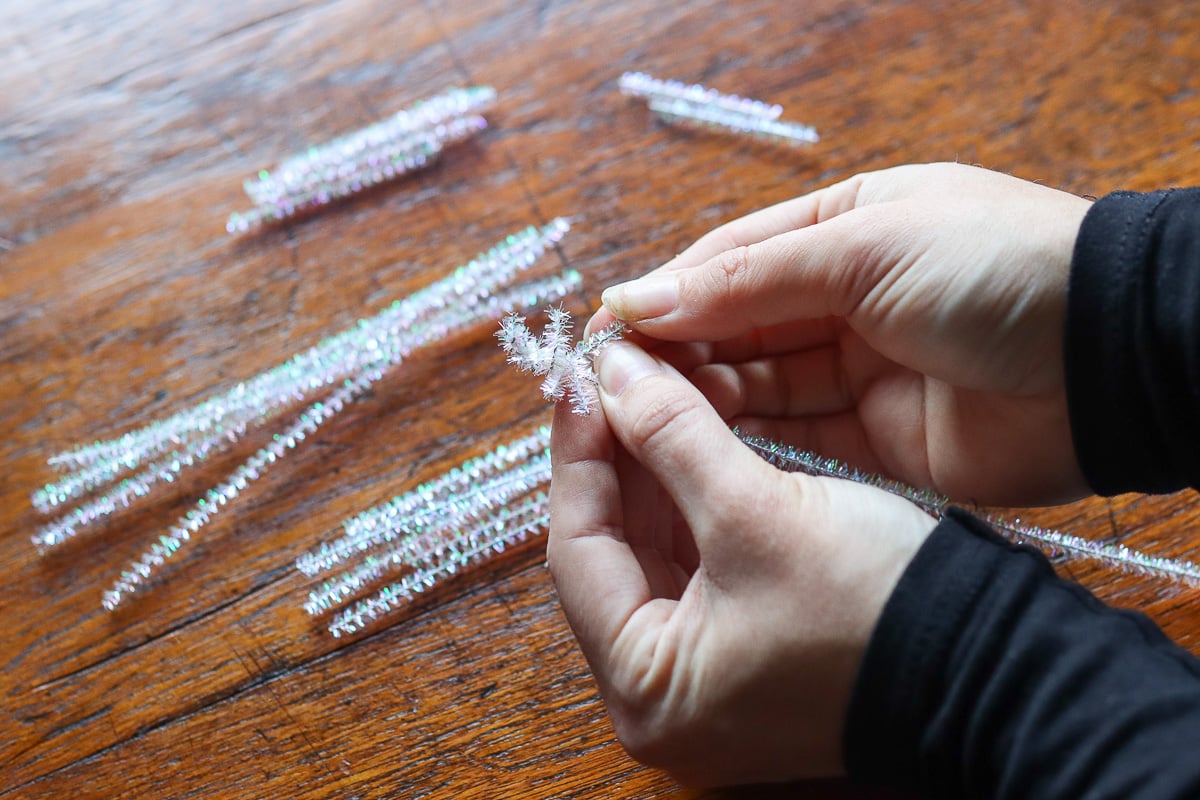
- Cut your pipe cleaners into smaller pieces of various sizes. The size and number can vary depending on how large and dense you want the tree to be. Cut five sets of three pieces to start, with each set slightly bigger than the next.
- Grab one pipe cleaner to be the central tree trunk. Starting with the smallest pieces, wrap the pieces around the trunk from the top down. The ends of each piece should stick out like branches.
- Continue wrapping the longer pieces around as you make your way down the trunk, adjusting the points to fill any gaps in space.
- Use one longer piece at the very bottom, curling the ends to make a more stable foundation.
As with the previous one, you can add decorations to this tree as long as they aren’t too heavy. If you don’t want to add decorations, you can also alternate with different-colored pipe cleaners to resemble tinsel.
Christmas Tree 3: Ruffles
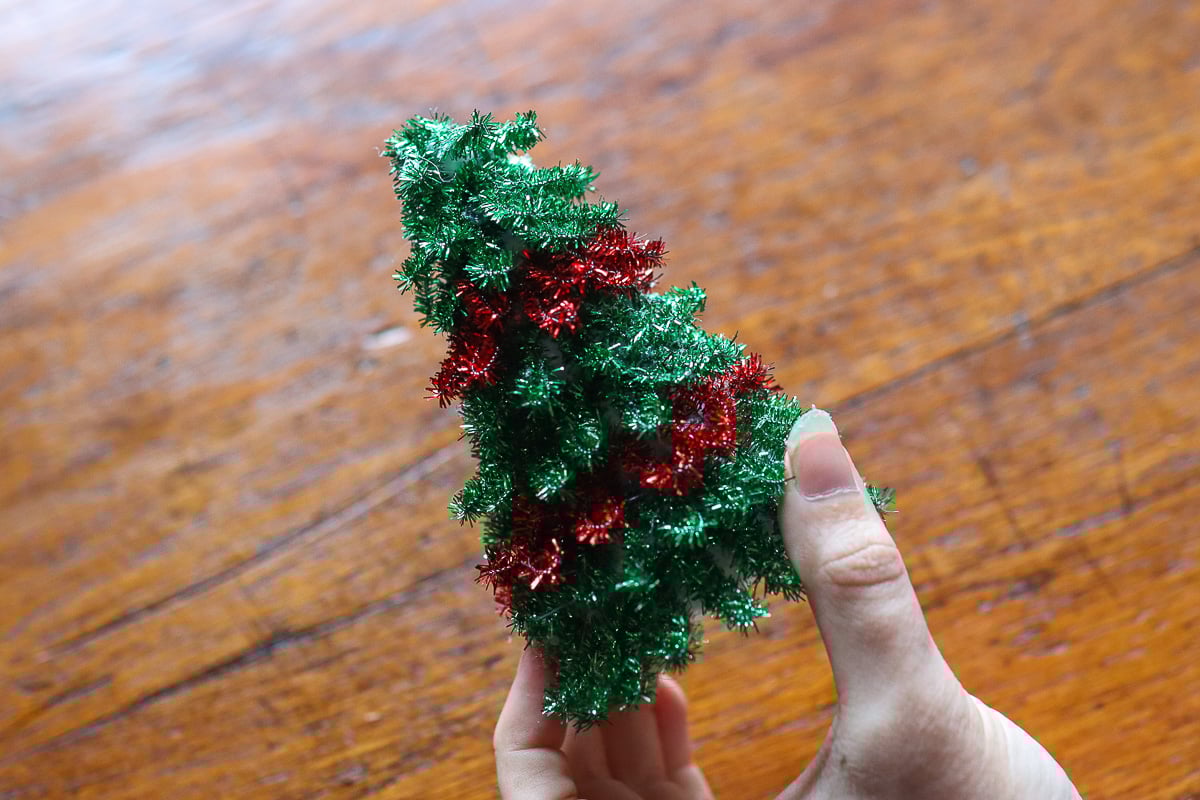
This final tree is my favorite because it’s arguably the most adorable. It also looks more realistic and less ‘crafty’ when it’s finished, but it does take the most time. Along with a glue gun, you’ll also need some kind of cone frame to glue the pipe cleaners to. Here are the steps:

- Twist the ends of a few pipe cleaners together to make one long piece, or keep them separate if you’re using different colors. I used seven pipe cleaners for a Christmas tree of this size, but you can adjust the number based on the size of your cone.
- Fold equal-sized loops into the pipe cleaner to create a zig-zag shape. A more rounded loop creates a softer tree, while pointed loops create a sharper look.
- Using your glue gun, leave a strip of glue on the top of the zig-zag and slowly twirl it around the cone shape. If the glue dries quickly, add new strips of glue in sections as you go.
- Once you get to the very top, trim off any excess and add one last dot of glue to ensure it doesn’t unravel.
Because this tree has a frame to support it, you can get away with hanging slightly heavier decorations or twirling some string lights around it. You can also adjust each of the bends to ruffle outwards, or keep them flat for a uniform shape.
You can try any one of these pipe cleaner Christmas trees based on the look you prefer, but I did have fun making them all. Although there is a lot of bending, they aren’t very time-consuming, and make a great project to complete with the family.