


Rosemary is an herb that I think doesn’t get nearly enough credit during the holidays. Everyone talks about spices like cinnamon and star anise, but rosemary has this fresh, woody scent and a look that feels festive on its own. Unlike many other types of greenery, it’s easy to find fresh year-round at any grocery store.
You can use rosemary for Christmas decorating, cooking, gifting, and even making your home smell amazing. Plus, it’s affordable compared to other specialty holiday greenery, so you can buy a bunch of sprigs without feeling guilty about the expense. That is, if you don’t already have a thriving rosemary bush you can harvest from in your backyard.
I’ve been incorporating rosemary into my holiday decorations and cooking for years now, and I keep finding new ways to use it. Some of these ideas are decorative, some are practical, and a few (usually my favorite ones) are both.
Tiny Wreaths

Miniature rosemary wreaths are surprisingly straightforward to make, and they pack a lot of visual punch for something so small. All you need is thin craft or floral wire, fresh rosemary sprigs, and some twine or ribbon for hanging.
Bend your wire into a circle a couple of inches across, then start wrapping rosemary sprigs around the frame, securing them as you go. If your rosemary is stiff enough to hold but pliable enough to bend, you may not even need the frame.
Overlap the sprig slightly so that the greenery appears full and the wire is not visible underneath. Once you’ve worked your way around the entire circle, tuck the end of the last sprig under the others and secure it with a final wrap of wire. Tie a loop of twine at the top for hanging, or leave it plain if you’re planning to set these on a flat surface.
These wreaths work beautifully as ornaments on your Christmas tree, or you can attach them to gift packages instead of traditional bows. I’ve also tied them onto chair backs for holiday dinners, and the scent that wafts up when people sit down is incredible. If you want to dress them up, weave in some thin red ribbon.
Hanging Bundles
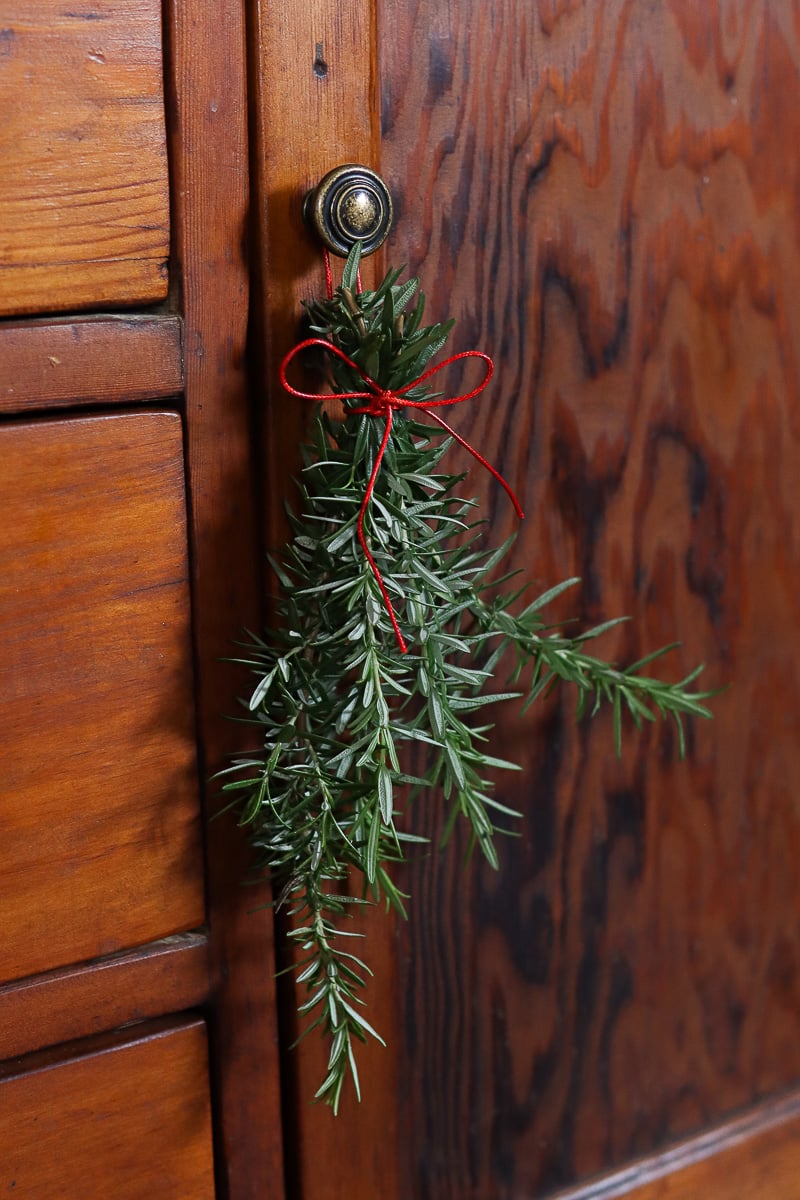
Sometimes the simplest ideas are the best ones. Gather several long sprigs of fresh rosemary together into a small bundle, wrap twine tightly around the stems, and hang them upside down somewhere visible. That’s it. No complicated steps, no special tools required.
I hang these bundles from doorways, cabinet handles in the kitchen, or even from curtain rods in rooms where I want a subtle herbal scent. As the rosemary dries, it releases more of its oils into the air, so the smell gets stronger over time. The dried bundles also look lovely in a rustic, understated way that fits well with farmhouse or natural-themed décor.
You can make these bundles as large or small as you want, depending on where they’re going. Bigger bundles make a statement, while smaller ones add just a hint of greenery. Mix rosemary with other herbs like sage or thyme if you want more variety in color and texture.
Rosemary Garlands

Creating a garland from rosemary takes more time than most of these other ideas, but the result is worth it. You’ll need plenty of rosemary sprigs, some twine or thin rope for the base, and scissors. Start by cutting a length of twine to your desired garland length, then begin attaching rosemary sprigs by wrapping the stems around the twine with additional thin wire or by tying them directly onto the twine.
Work in one direction, layering each new sprig over the stems of the previous one so you only see the green leafy parts. This creates a full, lush look rather than a sparse one. Keep adding sprigs until you’ve covered your entire length of twine. The garland will be flexible, so you can drape it along mantels, wind it around stair railings, or lay it down the center of your dining table.
Fresh rosemary garlands look beautiful for a while before they start to dry out. Once dried, they become more brittle but still look attractive if you’re careful with them. You can also lightly spray them with water every few days to keep them fresh for longer.
Festive Centerpiece

A rosemary centerpiece doesn’t require any special skills, just a good eye for arrangement. Start with a low, wide container. Fill the base with rosemary sprigs laid flat or propped up at angles, creating a bed of greenery.
From there, add whatever other elements speak to you. Pillar candles nestled into the rosemary create height and drama. Small ornaments tucked between the sprigs add a touch of color. Pinecones, cinnamon sticks, or dried orange slices bring in different textures and scents. The rosemary serves as both filler and fragrance, tying everything together visually and aromatically.
There’s no right or wrong way to arrange a centerpiece. Continue adding and adjusting until it appears balanced. If something doesn’t work, pull it out and try something else. The rosemary is flexible enough that you can rearrange it without damaging it.
Votive Vases

Take a votive holder or small glass jar and pack several rosemary sprigs against the outside, arranging them so the foliage points upward. Once they’re secured, cover them with twine or ribbon wrapped several times around the middle if needed, or leave them branching outwards.
The rosemary creates a natural sleeve around the glass, and when you light the candle inside, the warmth releases the herb’s scent. These look particularly nice grouped in odd numbers on a coffee table or mantel. You can make several in just a few minutes, and the rosemary stays fresh for quite a while since it’s not being handled much.
Just be careful to keep the rosemary foliage away from the candle flame itself. The sprigs should only come up as high as the rim of the votive, not extend above where the flame will be.
Napkin Rings
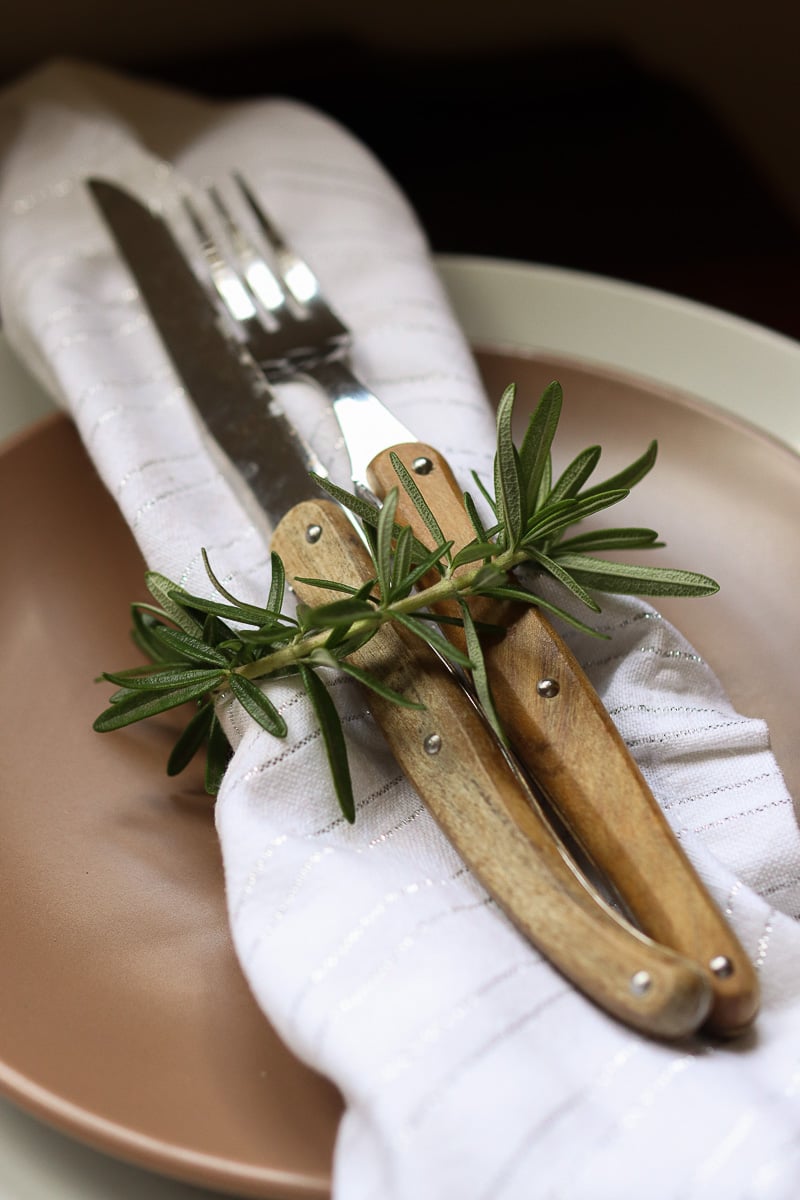
Rosemary napkin rings elevate your table setting without much effort. Cut a sprig of rosemary about five inches long, then lay it across your rolled napkin. Tie the ends in place with twine around the back, positioning the rosemary so the foliage is visible on top. You can leave it at that for a minimalist look, or tuck in a small sprig of berries or a cinnamon stick alongside the rosemary.
If you’re feeling ambitious, make these an hour or two before guests arrive so the rosemary is still at its freshest. They’ll wilt eventually, but they hold up well enough for the duration of a meal.
Make a Simmer Pot

A simmer pot is a natural way to make your home smell amazing at Christmas, and rosemary is particularly well-suited for this purpose. Fill a small pot with water and add several sprigs of rosemary, along with other aromatic ingredients such as orange slices, cinnamon sticks, whole cloves, and star anise. Bring it to a boil, then reduce the heat to low and let it simmer.
As the water evaporates, it releases all those scents into your home. The rosemary adds a fresh, herbal note that keeps it from smelling too sweet or spicy. You can keep adding water and let the same ingredients simmer for hours, or even all day if you’re home to monitor it.
I usually set up a simmer pot in the morning and let it go while I’m cooking breakfast. The whole house ends up smelling festive and welcoming, and it’s far superior to artificial air fresheners. Just don’t let the pot boil dry. Set a timer to remind yourself to check the water level every hour or so.
Trim a Rosemary Christmas Tree

If you’re growing rosemary as a potted plant, you can trim it into the shape of a small Christmas tree for the holidays. This works best with established rosemary plants that have a somewhat conical shape already, but you can coax most rosemary bushes into a tree-like form with strategic pruning.
Use sharp scissors or pruning shears to trim the plant into a triangular silhouette, cutting away any branches that stick out too far from the desired shape. Work slowly and step back frequently to check your progress. You can always cut more, but you can’t put it back.
Once you’ve established the basic tree shape, you can leave it as is or add tiny decorations, such as miniature ornaments or a small star on top.
The bonus here is that every time you trim your rosemary Christmas tree, you end up with fresh sprigs you can use for cooking or other craft projects. Nothing goes to waste. These living rosemary trees also make thoughtful gifts for people who enjoy both cooking and gardening.
Make Potpourri

Dried rosemary makes an excellent base for homemade potpourri. Spread fresh rosemary sprigs on a baking sheet and let them air dry for about a week, or speed up the process by drying them in a low oven. Once dry, mix the rosemary with other dried elements like orange peels, cinnamon pieces, whole cloves, and dried cranberries or rose hips. You can also use them fresh and allow them to air dry naturally.
Store your potpourri mixture in a jar and set it out in a decorative bowl when you want to use it. You can also package it in small muslin bags to tuck into drawers or closets, or tie them onto gifts as an aromatic addition. The rosemary provides a savory, herbal base note that balances out sweeter scents.
Every few weeks, give your potpourri a gentle squeeze or shake to release more of the oils and refresh the scent. You can also add a few drops of essential oil if the fragrance starts to fade, though good-quality dried herbs usually maintain their scent for a while.
Garnish Cocktails

Rosemary makes a surprisingly sophisticated cocktail garnish. A sprig of fresh rosemary in a gin and tonic, whiskey sour, or cranberry cocktail adds visual appeal and a subtle herbal aroma that enhances the drink.
For something more dramatic, lightly torch a rosemary sprig with a kitchen torch before placing it in the glass. The heat releases the oils and creates a smoky, aromatic effect. You can also infuse simple syrup with rosemary by simmering it with sugar and water, then using that syrup in holiday cocktails for a more integrated flavor.
Even just having a few sprigs of rosemary on your bar cart or drink station looks elegant and smells wonderful.
Use in Desserts

Rosemary might seem like an odd choice for desserts, but it pairs beautifully with certain flavors. Lemon and rosemary together are classic. Try adding finely chopped rosemary to shortbread cookies or pound cake batter for a subtle herbal note.
Rosemary also works well in chocolate desserts, believe it or not. A small amount of chopped rosemary in brownies or a chocolate tart creates a sophisticated flavor profile that tastes more complex and fancy than it actually is to make. You can also steep whole rosemary sprigs in cream or milk when making custards or ice cream, then strain them out before proceeding with the recipe.
During the holidays, rosemary shortbread cookies are incredibly popular. The herb keeps the cookies from tasting too sweet, and they’re distinctive enough that people remember them. Plus, they look beautiful with a small sprig of rosemary pressed onto each cookie before baking.
For DIY Gifts

Rosemary makes gift-giving easier because it can be incorporated into so many different homemade presents. Bundle several long sprigs together with ribbon and attach them to a bottle of olive oil or wine as a decorative touch. Package dried rosemary in small jars with instructions for making tea or potpourri. Include fresh rosemary in a gift basket alongside other cooking ingredients like garlic, olive oil, and sea salt.
You can also make rosemary-infused salt or sugar by mixing finely chopped rosemary with coarse salt or sugar and letting it sit for a few days. Or do the same thing with olive oil. Package it in small jars with pretty labels, and you’ve got a thoughtful, handmade gift that actually gets used rather than sitting on a shelf.
For people who appreciate natural products, bundle together some rosemary sprigs, a small candle, and a card with instructions for making a simmer pot. It’s a gift that encourages relaxation and makes their home smell good, which we all appreciate during the busy holiday season.